Why We Moved to Remote Indigenous Australia in the Prime of Our Lives

35 years of age and permanency at one of the most incredible public schools in metro Adelaide – sounds like a good time to hold forte and build a life, right? Well, all was not as it seems.
We had just come out of Covid, the world had become far more expensive, and I had only just met my amazing partner, Guinevere, just over two years prior. I’d sold my house in the country for a loss prior to Covid, and Guin had just gone through a long-term relationship break-up before we got together. This meant that, while not in debt, we were both basically starting again.
I was also finding myself at professional crossroads. I’d now done over a decade specialising in Health and Physical Education, taught in the classroom, and was lucky enough to get a small taste of leadership work in a school. One thing was for certain - I no longer wanted to be a career PE teacher, and I was keen to experience what else life had to offer. Would this be back in the classroom? Stepping into leadership eventually? Or keeping my eyes open for something else altogether? I wanted to position myself where I could properly assess future possibilities.
Guin had worked in hospitality for over a decade and was also at a stage where she wanted to see if there was more to life.
The previous year, Guin and I completed a 6000km road trip from Adelaide to Darwin and back. Guin, a country girl, felt an immediate appreciation for the outback and believed it could be a fulfilling experience.
Myself, having previously lived in the outback at a time when I wasn’t in the best of health, knew it was something I may want to return to one day when fully healthy. Now being in good health and with a supportive partner - we started to discuss whether it was the right time to take a big risk for our futures and head back out bush.
I also have a love of Australian history, having read many books in the area - so a chance to really understand more of our country’s story was becoming a very exciting prospect. Eventually, it became too good a chance to turn down.
We both landed jobs in a school in the remote APY Lands of South Australia, with the chance to live in one of the beating hearts of Aboriginal Australia.
This wasn’t without some apprehension, though. We were literally moving two weeks after the ‘No’ vote in the Voice referendum, and sitting in the back of our minds was how two new white people moving into community might be received.
We needn’t have worried. You learn pretty quickly on the APY Lands that you are worlds away from the voices of Canberra. The intensity of federal and state politics nowadays that permeates through city populations, slows to a trickle on The Lands. I must admit, it’s nice to be out of that inferno. I learnt quickly just how significant - or insignificant - this Voice to Parliament referendum really was. My views on the role of politics and government were challenged almost instantly upon moving to The Lands and continue to be challenged to this day.
The first thing we noticed was how welcomed we felt on The Lands. That small country town feel beats strong in Aboriginal Australia. People wave to you, come for a chat, share their culture, talk about sport, and speak of their hopes and dreams for the future. We understood that we are the guest on this land, and it is incumbent on us to try and integrate where we can. The last thing we want is to feel like we can’t belong out here just because of the colour of our skin, and it’s just as much on us to bridge that gap. I could not speak more highly of how the Anangu people have made us feel included in community life. You learn quickly, there is much more that can unite us as people, than divide us. My family’s history in Australia stretches back to at least 1837, only months after Adelaide was founded. Much of Australia’s story of late has taught us to feel great shame for our colonial heritage in this country. However, it’s clear to see the hope the two worlds out here can provide for the future. I now feel a sense of pride for all the ancestors of this country, as I feel their work has positioned us at a point where amazing futures could be achieved for all.
As my relationship with the people I have worked with has developed, it’s become obvious to me that the answers to the challenges facing the Anangu people are right here, with the people on the ground. To me, it’s not that diversity is automatically a strength - it becomes a strength when we unify behind common causes.
I’m a huge advocate for education as the vessel for progress, when it is done properly. I believe on-the-ground education, permanently in community, for adults, can empower communities to build the capacity to create the opportunities they wish to see. Education that allows everyone to share their thinking and have these ideas challenged and built upon so we can utilise the strengths of both worlds. Ultimately, what we think or taught to think, will determine what we learn. I strongly believe adult education is not set-up well enough in communities to allow this to happen. This is not to undermine the amazing strengths that already exist in remote indigenous communities. We see incredible things every day. It's just one ceiling that could be lifted.
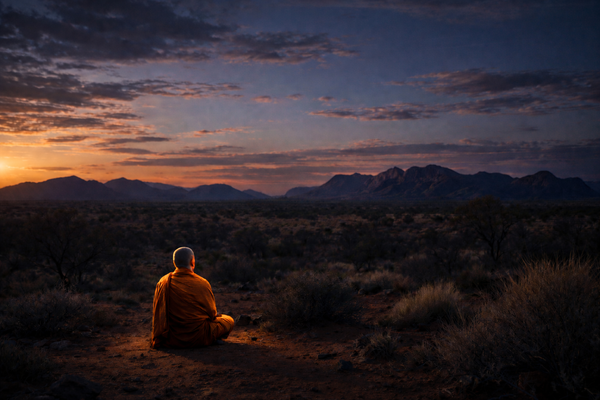
One tangible factor I have learnt is the concept of time on The Lands. Time works differently out here. Anangu will say, ‘white fellas are always in a rush’. The patience of the Anangu people is amazing to see. The Anangu people have taught us to slow down and that trying to force things to happen before it is ready only forces things to break. The enduring smiles on the faces of the Anangu people remind me that there’s plenty around us to appreciate every day. I certainly feel a greater sense of patriotism towards this country and gratitude for the life we have, that we should all unite behind to create, or even maybe, restore.
Having this extra time away from the stresses of the big city has allowed us both to study and move into new careers. We are now positioned in roles that play a small role in assisting Anangu people to create the opportunities they wish to see, and we are excited to see what can happen. Life now feels far more fulfilling, with much thanks owed to the Anangu people.
© 2026 Bryce Ingham - The Habit House Framework. All rights reserved.